


Power House Panel of Western Slope Legislators in Delta


On July 23rd, 2025, five of our State’s most prominent legislators representing the Western Slope met for a legislative update at Daveto’s to a sold-out crowd. The Legislative update was sponsored by Delta County GOP and the MC was Chairwoman Leslie Parker. The legislators present represented Delta County along with other counties on the Western Slope:
Senator Janice Rich from Senate District 7, Senate Minority Whip and winner of the “Legislator of the Year” award in 2023, represents the Cedaredge area in Delta County and all of Mesa County (she resides in Grand Junction).
Senator Marc Catlin, who resides in Montrose, is from Senate District 5. He represents most of Delta County, as well as Eagle, Garfield, Montrose, Gunnison, Pitkin, and Hinsdale Counties. Senator Catlin was the first member in history to be placed in a leadership position for a “standing committee of reference” while serving in the minority party. He is an expert on water issues affecting the Western Slope.
Representative Matt Soper, who resides in Delta, is from House District 54 and Vice Chair of the Judiciary Committee. He represents Delta and Cedaredge in Delta County, as well as Mesa County except for Grand Junction.
Representative Larry Don Suckla, who grew up near Naturita and was a prior County Commissioner for Montezuma County, is from House District 58. He represents the north fork of Delta county, most of Montezuma County, and counties Montrose, Ouray, Dolores, Gunnison, Hinsdale, and San Miguel.
Representative Rick Taggart, who resides in Grand Junction, is from House District 55, which represents Grand Junction, Clifton, Fruitvale, Orchard Mesa, and the Redlands. Rep. Taggart has a long history of business experience and was a prior mayor of Grand Junction for two years. He is a permanent member of the Joint Budget Committee for the state.
The legislators spoke individually, and their presentation lasted about 50 minutes. They covered major points from the 2025 legislative session, which began in January and ended in May.
Sen. Rich
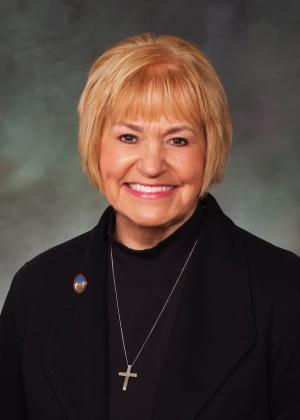
Senator Rich led off with how many bills were introduced which were “657”. “Of those, 487 passed, 11 were vetoed and 476 bills were signed into law by Governor Polis.” Each representative is allowed to present 5 bills. “Most of the bills that she and other Republicans presented were killed in committee.”
“At the start of the year, the Senate Republicans unveiled a number of bills that, if passed, would have given the average Colorado family over $4,500 in annual savings. Together, the Senate Republicans took to the West Foyer of the Capitol and unveiled a striking visual—a tower of 4,500 one-dollar bills representing the amount a Colorado family could save every year if their legislative package was adopted.”
Most of the 487 bills that passed and “signed into law by Governor Polis were along party lines and weren’t that helpful to Coloradans, in fact are harmful.” “279 were strictly Democrat bills, of those, 69 failed with the remaining 210 signed into law.” According to Sen. Rich, the majority party wasn’t interested in what the Republicans had to offer and killed each of their bills one by one. (Remember, there are only 12 Republicans to the Democrats' 23 in the Senate.) Instead, they prioritized their own political agenda rather than prioritize the financial well-being of the people of this state.
For example, the first bill the Republicans offered, SB131, would have brought down housing costs by making critical changes to our state’s construction defect laws and by cutting crushing regulations that discourage new housing construction. It died in committee. Sen. Rich introduced her own bill, “SB156 which would have drastically slashed excessive regulations that are crushing Colorado’s economic prosperity. It would have repealed regulations created in SB22-193, SB20-204, SB20-218, HB22-1362, and HB21-1198. And while all but two testified in support of her bill, it died in committee on a party- line vote.” The Republicans submitted a total of 70 bills, 66 failed and only 4 passed.
Sen. Rich said, “Being in the minority party is difficult, but we did have some successes. While it is hard to see the majority party reject their efforts to help Coloradans with their hardships, it was the Republican’s efforts that ultimately secured some meaningful victories for the people of Colorado and will help ease some of the burden on families and businesses.”
“Had we not succeeded in stopping HB1302, Coloradans could have seen an increase in housing costs. The cost of healthcare which has reached unprecedented heights would have continued to rise if we had not stopped SB198.” And of course, thanks to overwhelming pressure from our caucus and families, House Joint Resolution 1023—which would have used taxpayer dollars to sue the taxpayers—was never introduced to the Senate.”
Senator Catlin
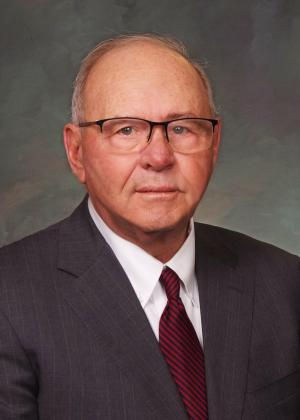
Sentaor Catlin talked about the impact the Wolf Program is having on the Western Slope and how it continues to be a major concern. In spite of the extreme amount of money it’s costing taxpayers to stick with the program, CPW isn’t willing to pause it. (At the recent Colorado Parks and Wildlife Commission meeting in Grand Junction on July 17th, it was debated whether CPW would pay Wolf depredation Claims submitted by two Ranchers from Grand County and Pitkin County. After the contentious debate, a motion was made to award the 2 Ranchers for their losses. It narrowly passed on a 6 to 5 vote.) It cost CPW nearly $200,000 in wolf depredation claims, pushing total compensation in 2024 to over $600,000, which is more than $253,000 over what the state budgeted through its general fund.
The depredation (killing of livestock by wolves) from the Copper Creek Wolf Pack continues in Pitkin County, with a new calf killed just since the 17th meeting. Because of the risk to ranchers and farmers who dare to ask for compensation for livestock they’ve lost, Catlin along with others introduced a bill (SB25-038, the Wildlife Damage Protection of Personal Information Act,) It passed and was signed into law. “The law is designed to protect ranchers’ identities and personal information and helps stop those who want to interfere with the right for the rancher for due process in wolf depredation losses or those who just want to see wolves. This helps some—but doesn’t fix the problem.” The latest concern is that CPW may simply move this pack to another county instead of removing it altogether, (like to a wildlife sanctuary.)
Sen Catlin also touted his bill SB2506, which addresses repeated phone calls resulting in obstruction of Government operations, particularly 911 calls. The bill was also co sponsored and passed and became law April 12, 2025. The law came about because of frivolous 911 calls being spotlighted in Colorado Springs. Sen Catlin said it wasn’t just in Colorado Springs but it was happening all across the State. “Garfield County came to me and said they were having a serious problem with people dialing 911 up to 1000 times a month with no way to stop them.” With the passage of this law, it is now a criminal offense which can lead to charges of false reporting of an emergency which is classified as a class 1 misdemeanor.” (If the false report results in significant consequences, it can escalate to a class 4 felony.)
Rep. Suckla
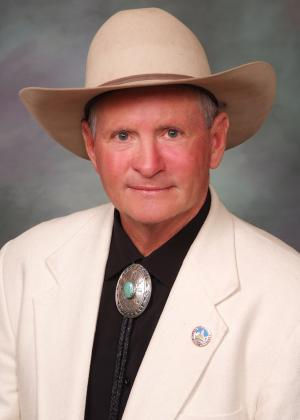
Representative Suckla started out saying he didn’t much like the State House, “It is an evil place.” He described his first year in it as “like drinking from a fire hose!” He went on to say, “Imagine, it is like being in a third-grade class and having to learn 500 rules, with the expectation that next time you return, you have to learn 600 new ones!” He was referring to the enormous number of bills presented during the session, and the complicated steps it takes to pass them. He also shared frustration about how “Democrats would not stay on the House floor to listen to testimony against bills.” “The Dems just left the chamber, went someplace else to do something, and only return to vote. Nothing anyone said changed their minds.” (For examples, the public opposition to bills like the Anti-Gun measure SB25-003 on semi- automatic firearms, and HB25-1312—what many are calling the “anti-parent” bill.)
Well over 700 concerned citizens signed up to testify against HB25-1312, compared to only about 70 in support. “The people against the bill were ignored.” (This bill allows the courts to remove children from a home simply for “misgendering” a child’s identity. Critics say it’s one of the most extreme anti- parent bills in America.)
Rep. Soper
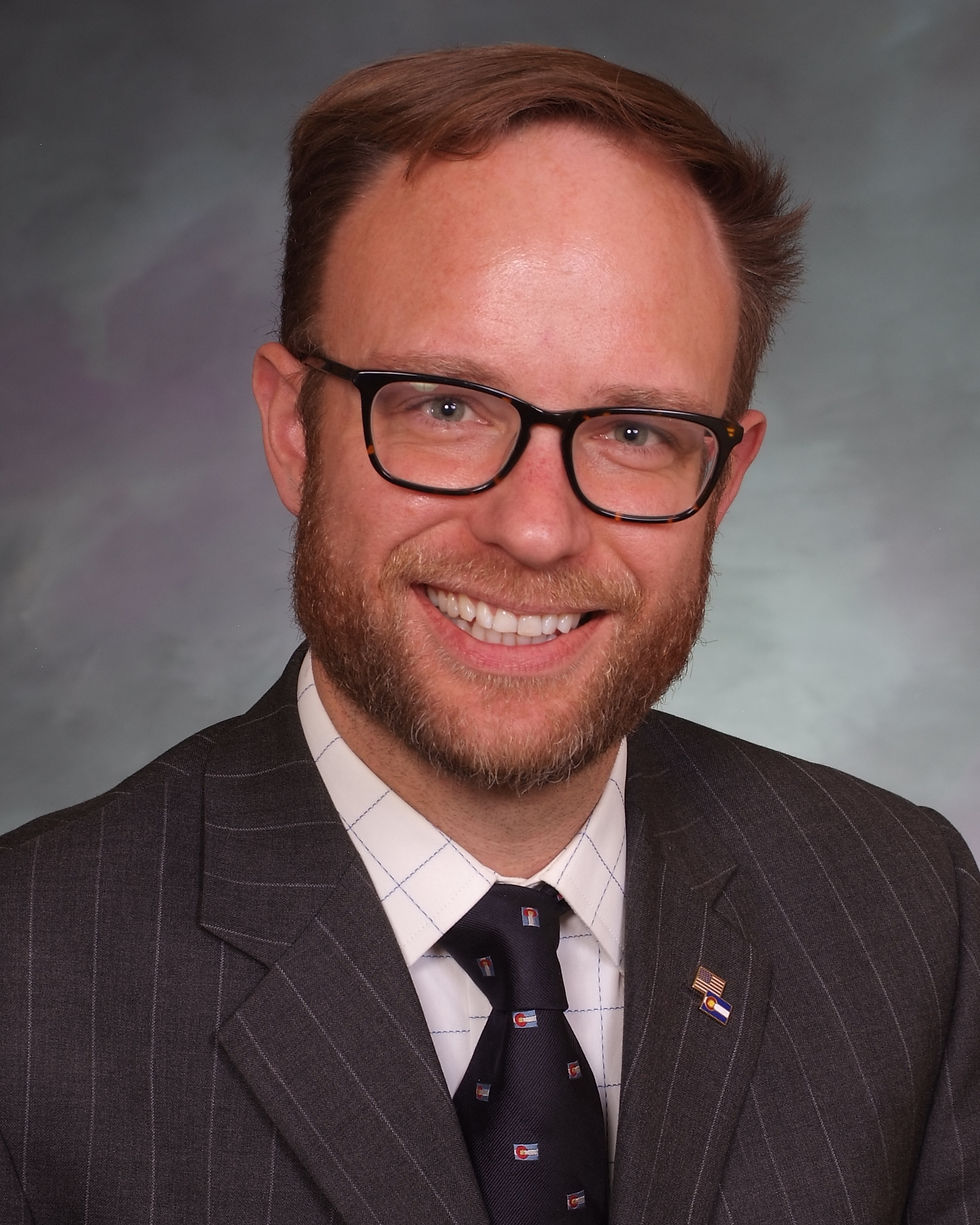
Representative Matt Soper so agreed about how hard it is to get bills passed but there were some bipartisan bills that passed. He highlighted two bipartisan wins that he co-sponsored: HB25-1275 and SB25-304, which addressed a serious scandal involving manipulated DNA samples by a forensic lab technician. That scandal affected over 1,000 cases and caused a huge backlog at the Colorado Bureau of Investigation (CBI). (HB25-1275 enables case reviews, requires notification within 91 days, and mandates reports within 14 days. CBI must report on any issues that occurred before July 2025 by September 1, 2025.)
Victims, defense attorneys, prosecutors, and even those convicted were extremely frustrated by not being notified of the problem in a timely manner. SB25-204, the companion bill to HB25-1275, tackles the backlog by allocating $112,365 to fund a Sexual Assault Forensic Med Evidence Review Board, chaired by the Attorney General to monitor the process. The goal is to clear the back log of cases by July 2027 and reduce DNA processing time to 90 days. “Lawmakers from both parties backed HB25- 1275 unanimously in the House Judiciary committee, indicating how urgent the problem is.” Rep. Soper also pointed out his Broad Band Law (HB25-1080) that was passed and signed into law on
5/30/25. The measure is to incentivize the deployment of wireless telephone infrastructure in the State particularly in rural areas, under-served areas and create incentives for investments in new communication infrastructures in addition to incentives already created by state and federal law.
Rep. Taggart
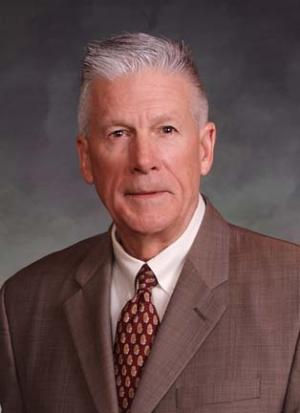
Representative Rick Taggart, who serves on the Joint Budget Committee (JBC), described how the JBC committee works. The JBC is the General Assembly’s permanent fiscal and budget review agency. There are six members, and all must agree 100% to pass the state’s budget or it is rejected. He described working on the “Long Bill” ( or “Long Appropriations bill”) which is what they call the “full appropriations package” (or budget) prepared each year. The budget process is the result of a collaboration between the legislative and executive branches over the entire year. The process starts with the Governor who submits his budget and unfunded mandates for the state which must be submitted to the JBC by November First. It includes all expenses as well as revenue estimates. The expenditures should not exceed available revenue.
“This year, the Governor’s proposed budget was well over what was what was available to cover all expenses.” “They were facing a $1.2 billion funding deficit shortfall,” Taggart said. It was believed that the deficit was driven by higher than expected Medicaid costs and structural deficit (over spending). The JBC worked hard to find resources to cover the budget expenses for the year by pulling from the State’s cash funds reserves and making cuts in some areas.
Republicans attempted to pass several amendments to reduce spending—many involving cuts to illegal immigration, abortion, unions, and firearms—but were rejected. Taking money from the cash reserve, helped for this year, but the concern is there won’t be enough for next year.
On April 28, 2025, the $44 billion spending budget for the new fiscal year was signed into law. The JBC will return the first week of November to begin work on next year’s budget. “The Majority party continues to blame President Trump and the “Big Beautiful Bill” for the lack of revenue and funding for next year. Republicans point out that it’s the Democrats’ lack of fiscal responsibility and massive spending on pet projects and their political agenda that’s to blame. For example, SB25-276, the immigration bill started in the Senate. Per Sen Rich, “The Republicans warned the Democrats that they will lose Federal Funding if that bill passes.” It did pass and was signed into law May 23, 2025. SB25- 276 was promoted as “strengthening constitutional rights for immigrant families and all Coloradans”— enforcing Fourth Amendment rights in public spaces. However, it is against ICE and bars local law enforcement across Colorado from holding criminal illegals for ICE, effectively making all of Colorado a sanctuary state—counter to Trump’s deportation mandate.
A few issues from the audience:
1.) What about unfunded mandates and how they’ll be enforced? (Air Quality Control Commission Regulation Rule #31 Control of Methane Emissions from solid waste and landfills was mentioned as one of these “unfunded mandates.” This Regulation targets methane gas emissions caused by waste recycling, like what is in Delta County. (You can find this regulation on the Colorado Energy Web site as part of the “Green House Gas Pollution Reduction Road Map.”) Mesa County identified nearly “10 million annually for the past 2 years on unfunded mandates from the state, just in Mesa County alone.” These unfunded mandates don’t just involve Rule 31, the mandates redirect money from public safety, roads and community services and the counties wind up paying for these mandates
that are decided at the State level without input from the counties. Rep Taggart responded, “Counties are pushing back, because there’s no funding or clear way to enforce these mandates which affect all 64 counties.” Mesa County commissioners have already drafted a letter of objection to the costs—and other county commissioners plan to follow, including Delta’s County commissioners.
2.) “How they determine what bills to present?” Sen Catlin responded, “The bills I introduce are generally from what his Constituents want him to do about a concern they have and would like him to do something about it.” Others agreed and encouraged that the public continue to make their needs known.
3.) “There are rumors that because of the passage of Trump’s BBB, there is Federal cuts to our Medical system, is that true and how it would affect Colorado? The cuts to Medicaid are supposed to be regarding fraud and abuse of the system. In addition people will be required to work some in order to get benefits when they apply. Sen Taggart said, “there may be cuts but not until 2027” according to the information he has from the Feds. This year is funded.” Rep Matt Soper, said the impact of the cuts to medicaid will affect Delta County hospital because much of the funding for the hospital is from Medicaid. “They are already closing some clinics and services to compensate for the expected loss of revenue. It is a real concern.”
4.) “How do we go back to paper ballots and get rid of the machines?” The panel responded, “No, we cannot as State statute requires the use of electronic voting machines in Colorado for our elections.” “We can not change any statute until we have enough Republicans in the State House and Senate to make such changes. Remember, we are outnumbered 2 to 1 in the State House and Senate.”
Final thoughts:
The panel agreed it’s nearly impossible to get bills stopped or amended as the Majority party holds the numbers in the State’s General Assembly. Republicans are outnumbered in both chambers—43 Democrats to 22 Republicans in the House and 23 Democrats 12 Republicans in the Senate. It’s the same in the committees. Most committees have a 4–2 or 3–2 Democrat-Republican split. In the House, the split can go up to 8 Democrats to 4 Republicans. The committees are so important as it is the first step in the process of passing a bill. It either passes as presented, or as amended or is killed. From the panel’s responses, “The Republicans may be out numbered but they’re still fighting hard for Colorado and do make a difference.” “We do have bipartisan bills we work on together so it is important for the public to stay engaged.”
It is essential to support our Republican Legislators and let them know how much you appreciate the work they do. We MUST find a way to get out the vote and elect more Republicans to office as well as keep our current Republican officials IN office. The Delta County GOP fully supports this concept. Please visit www.deltacoloradogop.com to find out more. It is full of information with links to our elected officials and other sites. This is a link to the Colorado General Assembly website to find more information about bills mentioned is this blog and others: https://leg.colorado.gov/bills
A huge thank you to our legislators for their time and for the tremendous amount of information they provided. We are so thankful for all who came! I want to mention that among the attendees, were all three Delta County Commissioners; Wendall Koontz, Mike Lane and Craig Fuller. Also present was Candidate for HD54 Nina Anderson and Nova Tucker on behalf of Congressman Jeff Hurd. I want to give special recognition to Daveto’s for their venue and for their amazing food! Thank you!
Submitted by Shirley Bauer Cedaredge, Colorado

Comments